You just picked up the car. The paint is flawless, the finish is deep, and there isn’t a single mark on it. That’s exactly the moment the clock starts ticking.
Drive it home on the 405 and your front bumper is already taking fire: sand, gravel kicked up by the truck ahead, the odd stone that pings off the hood at 70. None of it leaves a mark today. Give it two years of Orange County commuting and you’ll start seeing the little chips at the leading edge of the hood, the sandblasted haze on the lower bumper, the etching where a bird dropping sat in the sun too long.
Paint protection film is the answer to that problem, and a new car is the best possible time to apply it. The paint is perfect, so the film locks in a perfect surface. Wait until the chips show up and you’re just protecting damage.
But PPF isn’t cheap, and not every car or every owner needs the full treatment. So let’s walk through the actual decision: what it protects against, how much coverage you really need, where ceramic coating fits, and how to tell if it’s worth it for your situation.
What PPF actually protects against
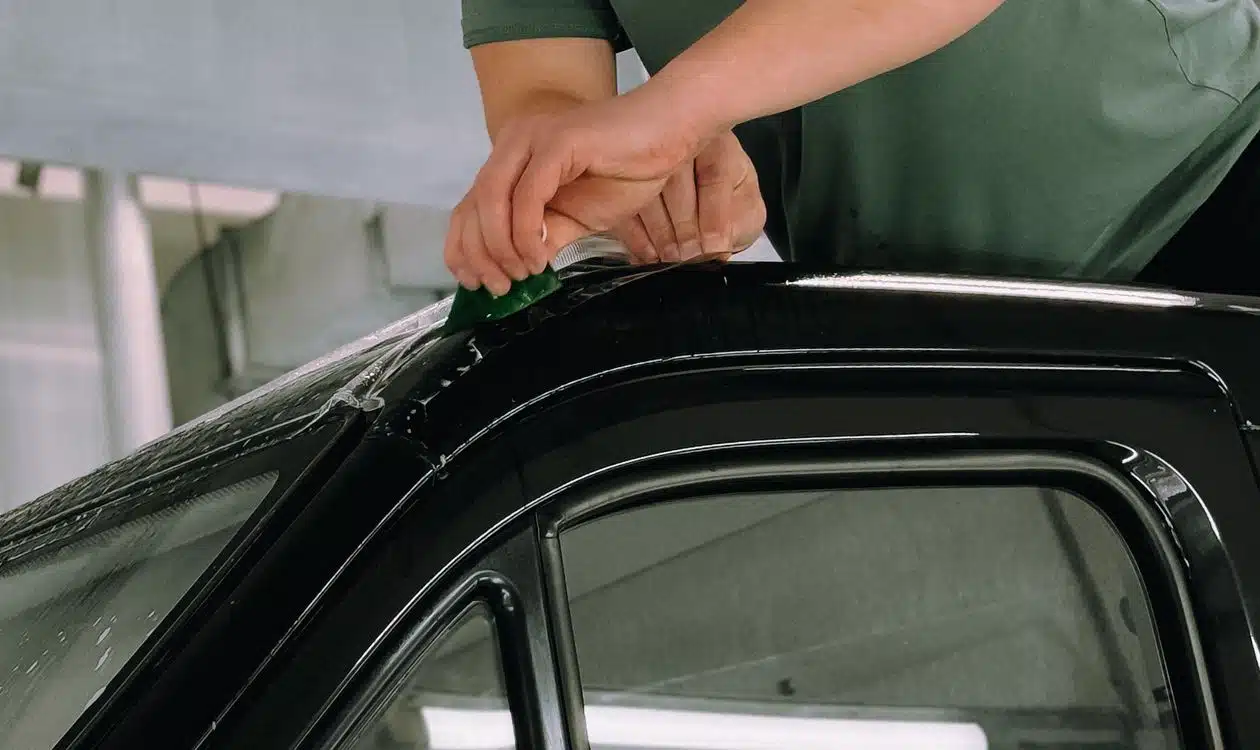
Paint protection film (you’ll also hear it called clear bra) is a thick, clear urethane layer that bonds to your paint. It takes the hits so the paint doesn’t. On a new car, here’s what it’s up against:
- Rock chips and road debris. This is the big one. Gravel, sand, and stones thrown up by traffic hit your front end constantly at freeway speed. PPF absorbs the impact and, in most cases, the film self-heals minor scuffs with heat from the sun or warm water.
- Bug guts and bird droppings. Both are acidic. Left on hot paint, they etch permanent marks. Film gives you a buffer. You wipe it off the PPF instead of scrubbing it off your clearcoat.
- UV fade. Southern California sun is relentless. Quality film blocks UV and slows the oxidation that dulls paint over years.
- Road salt and grime. Less of a concern here than in snow country, but the coastal air and the occasional trip inland still throw chemicals and mineral spray at your finish.
The thing PPF does that wax and sealants can’t: it’s a physical barrier with real thickness. A ceramic coating makes water bead and adds gloss, but it’s microns thin. It won’t stop a rock. Film will.
How much coverage do you actually need?
This is where most of the money decision lives. You don’t have to wrap the whole car, and for a lot of new-car owners that would be overkill. Coverage generally breaks down into three tiers.
Partial front (the “high-impact” package). Covers the areas that take the most abuse: the leading edge of the hood, front bumper, side mirrors, and sometimes a strip on the fenders. This is the budget-conscious choice, and honestly it stops the majority of the damage most people ever see, because most chips land on that leading edge.
Full front. Extends the film across the entire hood, full front bumper, both fenders, mirrors, and usually the headlights. This is the sweet spot for most new daily drivers. It kills the “chip line” you’d otherwise get where partial coverage ends, so there’s no visible seam of protected-vs-unprotected paint down the hood.
Full vehicle wrap. Every painted panel. This is for people keeping the car long-term, ordering a hard-to-replace color, or protecting a high-value vehicle where any repaint hurts resale. It’s the most expensive by a wide margin, and for a lot of commuters it’s more than they need. But for the right car it’s the only option that leaves nothing exposed.
If you’re not sure where you land, the honest answer is that full front covers the 90% case for a new daily driver. Partial front is fine if budget is tight and you mostly want the hood and bumper handled. Full wrap makes sense when the car is special or you’re keeping it a decade.
Cost tracks pretty directly with coverage and with the film brand. We break the numbers down by tier and vehicle type in our Orange County PPF cost guide, worth reading before you set a budget.
PPF vs. ceramic coating vs. both
People treat these as competitors. They’re not. They do different jobs, and on a new car the smart play is often both.
PPF is impact protection. It stops chips, absorbs debris, self-heals scuffs. It’s thick, physical, and it’s the only one of the two that saves your paint from a flying rock.
Ceramic coating is a chemical barrier. It bonds to the surface (or to the top of the film), makes water and dirt slide off, deepens the gloss, and makes the car dramatically easier to wash. What it does not do is stop physical damage.
The reason installers often recommend both: film handles the impact, ceramic goes on top of the film to make it hydrophobic and easy to clean, and where there’s no film (glass, wheels, lower panels on a partial job) the ceramic still adds slickness and UV resistance. You get chip protection and easy maintenance in one shot.
If you’re weighing which to prioritize on a tighter budget, we lay out the full trade-off in PPF vs. ceramic coating. Short version: if you can only do one and you drive freeway miles, choose film for the front end. Ceramic is the easier add later.
Which film should you ask for?
Brand matters more than people expect. The cheap films yellow, lift at the edges, and don’t self-heal well. The reputable ones (XPEL, 3M, SunTek) hold their clarity, carry real warranties of typically 10 years, and heal light marks on their own.
We’re not going to re-run the whole brand shootout here, because we already did it. If you want to compare clarity, warranty, and finish across the major films, read XPEL vs. 3M vs. SunTek. The one line worth carrying into your consult: ask what brand the shop installs and what the warranty actually covers, and be skeptical of any quote that’s suspiciously cheap. That’s usually a no-name film or a rushed install.
How to decide: is PPF worth it for your new car?
Run yourself through these questions. They’ll get you to a clear answer faster than any pros-and-cons list.
How long are you keeping the car? Keeping it 5+ years or paying it off and driving it into the ground? Film pays for itself in preserved paint and resale. Leasing for 24 months and handing it back? Partial front to avoid chip charges at turn-in is usually all you need.
How many freeway miles do you drive? Heavy commuter on the 405, 55, or 5? Your front end is getting sandblasted daily, and full front is easy to justify. Mostly short local trips? You can lean toward partial.
How replaceable is the paint? A common color on a mainstream car repaints cheaply. A special-order color, a matte finish, or a low-volume model does not, and that pushes you toward more coverage.
How much does a flawless finish matter to you? Some people genuinely don’t notice a few chips. Others can’t unsee them. If you’re the second kind, you already know PPF is worth it. The only question is how much.
What’s the budget? Be realistic. If full front stretches you, partial front on the highest-impact areas still stops most of the damage. Something is a lot better than nothing here.
Here’s the honest summary. For a brand-new daily driver in Orange County that you’re keeping a while, full-front PPF is worth it. It’s the coverage level that stops nearly all the real-world chip damage without the full-wrap price. Add ceramic on top if easy washing and gloss matter to you. Go full wrap only if the car is special or long-term. And if the budget’s tight, partial front beats no protection every time.
Frequently asked questions
Is paint protection film worth it on a new car?
For most new daily drivers, yes, especially at the full-front coverage level. A new car has perfect paint, and PPF locks that surface in before rock chips, bug etching, and UV start doing permanent damage. It’s cheaper to protect flawless paint than to fix chipped paint later.
Should I get PPF before or after taking delivery?
As soon as possible after delivery, before you rack up freeway miles. The film bonds best to clean, undamaged paint, so the sooner it goes on, the more it protects. A good installer will also decontaminate and prep the paint first.
Does PPF ruin or damage the paint underneath?
No, when it’s installed and removed correctly by a professional. Quality film is designed to come off cleanly, even years later, without pulling factory clearcoat. The risk comes from cheap film or an inexperienced installer, which is why brand and shop choice matter.
How long does paint protection film last?
Reputable films from XPEL, 3M, and SunTek typically carry 10-year warranties and last accordingly with normal care. Self-healing top layers keep them looking clear by erasing minor swirls and scuffs with heat.
Do I still need ceramic coating if I have PPF?
You don’t need it, but many owners add it. Ceramic on top of the film makes it hydrophobic and much easier to wash, and it covers the areas film doesn’t: glass, wheels, and any unfilmed panels. They solve different problems. Film stops chips, ceramic handles cleaning and gloss.
Is full-vehicle wrap overkill?
For most commuters, yes. Full front stops the overwhelming majority of chip damage because that’s where debris actually hits. Full wrap makes sense for long-term keepers, special colors, and high-value vehicles where any exposed panel is a risk you don’t want.
Protect it while it’s perfect
The best time to film a new car is now, while the paint is flawless and there’s nothing to protect but a perfect surface. Every freeway mile you drive unprotected is a mile your front end can’t get back.
If you’re in Orange County, come talk it through with us. We’ll look at your car, how you drive, and how long you’re keeping it, then recommend the coverage that actually fits, not the biggest package we can sell you. Book a consultation at our Costa Mesa or Huntington Beach shop and we’ll map out the right plan for your new car.