Picking a tint shop is one of those decisions that looks simple until you start calling around. One shop quotes $99 for the whole car. The next wants $600 and won’t budge. Both say “lifetime warranty.” Both say “ceramic.” So how are you supposed to tell them apart?
Here’s the honest answer: the film matters less than the shop. A great installer with a mid-tier film will out-last a careless one with the best film money can buy. Tint that bubbles, purples, or peels at the edges is almost never the film failing. It’s a bad prep job, a dirty install space, or a shortcut on the curing.
This guide walks you through what actually separates a good Orange County tint shop from a cheap one, the seven questions worth asking before you hand over your keys, and what a fair price really looks like out here. We run two shops in OC ourselves, Huntington Beach and Costa Mesa, so we’ll be upfront about where we fit. But the checklist below works for choosing any shop, including the ones down the street from us.
What separates a good tint shop from a cheap one
Three things, mostly. Everything else is detail.
Where they do the work. Window film goes on wet, and any speck of dust trapped under it becomes a permanent bump you’ll stare at every time the light hits the glass. Good shops install in a clean, enclosed bay, not outdoors, not in an open lot, not curbside. If a “mobile” installer wants to tint your car in your driveway on a breezy afternoon, that’s how you get contamination. (We’re shop-based for exactly this reason: you bring the car to us.)
Whether they’re an authorized dealer. This is the one most people skip, and it’s the one that protects you. Brands like 3M, XPEL, LLumar, and SunTek only let authorized dealers register their warranty. A shop can buy film off the gray market and still call it “3M,” but if it fades and they’ve closed up, you’ve got no manufacturer to fall back on. Authorized status means the warranty is real and registered in your name.
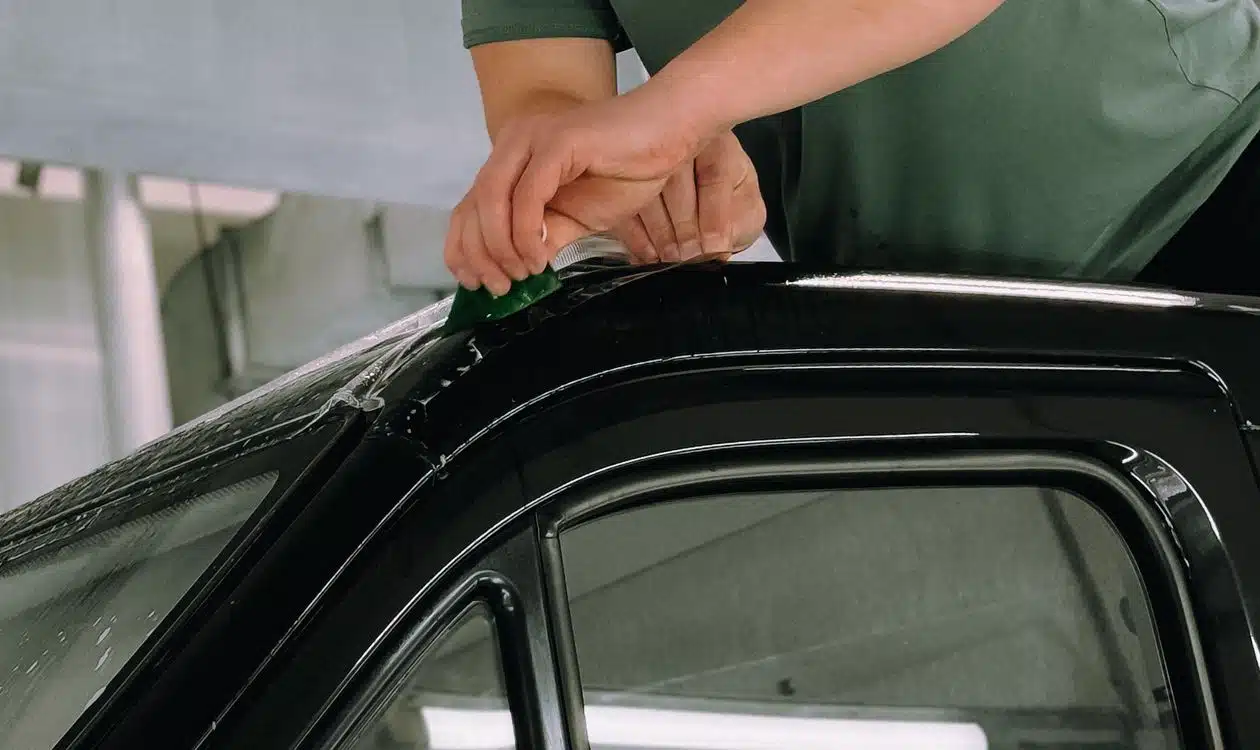
How they prep. The film is the last step. Clean glass, careful edge work around defroster lines and factory seals, and proper cure time are what make tint disappear into the car instead of announcing itself. A shop that rushes prep to fit more cars in a day is the shop whose work you’ll notice in six months.
Cheap quotes almost always mean a compromise on one of these three. When someone quotes $99 for a full car, ask yourself which corner is getting cut, because one of them is.
The 7 questions to ask before you book
Call or message the shop and run through these. You’ll learn more from how they answer than from the answers themselves. A shop that knows its stuff will welcome the questions.
- Are you an authorized dealer for the film you’re quoting? If yes, ask which brands. If they dodge or say “it’s basically the same film,” treat that as a no.
- Where do you do the installation? You want to hear “an enclosed, climate-controlled bay.” Not a parking lot.
- What’s the actual warranty, and who honors it, you or the manufacturer? A shop-only warranty is worth nothing if the shop disappears. Manufacturer-backed, registered in your name, is what you want.
- What VLT will my front side windows be, and is that legal in California? A shop that knows the law cold will answer 70% without hesitating. One that shrugs is one that’ll happily give you a ticket. (More on this below.)
- Can I see examples of your work, real cars, not stock photos? Ask for their portfolio or reviews. Then actually look at the edges and the rear glass in the photos.
- How long will the car be with you, and how long before I can roll the windows down? A rushed timeline is a red flag. Film needs time to cure; rolling windows too early can slide fresh film out of place.
- What happens if I’m not happy with it? Listen for a straight answer. Good shops stand behind their work without getting defensive.
If a shop gets impatient with these questions, you have your answer. Booking a tint is a several-hundred-dollar decision you’ll live with for years. You’re allowed to ask.
Ceramic vs. dyed: what the film choice actually changes
Film type matters less than the shop, but it’s not nothing. Here’s the short version.
Dyed film is the budget option. It cuts glare and looks fine on day one, but it doesn’t reject much heat, and cheaper dyed films are the ones that turn purple and fade over a few Southern California summers.
Ceramic film costs more and earns it. It blocks a large share of infrared heat, the part of sunlight you actually feel, without going dark or interfering with your phone signal, GPS, or a toll transponder. On the 405 in August, that heat rejection is the difference you’ll notice. Ceramic also holds its color instead of fading.
For most OC drivers, ceramic is the right call precisely because of our climate: roughly 280 sunny days a year is a lot of load on your interior and your AC. If you want the full breakdown of how the two compare, we wrote a ceramic vs. dyed guide that goes deeper.
Two ceramic films worth knowing by name: 3M Crystalline and XPEL Prime XR+. Both are widely installed and both hold up. If a shop offers them and is an authorized dealer, you’re in good shape.
What OC drivers should expect to pay
Real numbers, not a sales pitch: a full-vehicle tint in Orange County runs roughly $199 to $749+, depending on the film and the size of the vehicle. A sedan in entry-level film sits near the bottom; a large SUV in premium ceramic sits at the top.
That range tells you two things. First, a $99 full-car quote is below the floor for legitimate film and a clean install, so somebody’s cutting a corner. Second, the top of the range isn’t a rip-off; premium ceramic on a big vehicle is genuinely more film and more labor.
We keep a full window tinting cost breakdown for Orange County if you want to see how price moves with film type and vehicle. Use it to sanity-check any quote you’re handed.
California’s tint law: know it before you book, not after
This is where a lot of drivers get burned, and it’s entirely avoidable. California Vehicle Code §26708 sets hard limits:
- Front side windows must let at least 70% of visible light through. So the film you add there has to be very light, often 88% VLT film or higher, to keep the glass-plus-film combined at or above 70%.
- Windshield: no tint except a thin non-reflective strip above the AS-1 line.
- Back side windows and the rear window: no darkness limit. Go as dark as you like.
A first violation is a correctable “fix-it ticket,” but the fees still stack up, and it’s a hassle you didn’t need. There’s also a §26708.5 medical exemption if you have a documented condition that requires darker front glass.
The takeaway for choosing a shop: a shop that knows this law will steer you to a legal, ceramic front-window film that still rejects real heat. A shop that says “we can do it as dark as you want up front” is telling you they’ll write you a ticket. Our full California window tint law guide has the VLT chart by window if you want the details.
Warranty and installer credentials: the part people skip
If you only check one thing, check this: is the warranty backed by the manufacturer and registered in your name?
Here’s why it matters. Film brands offer strong warranties, but only through authorized dealers who register the install. Buy from a shop working off gray-market film and the “lifetime warranty” is really just that shop’s promise. If they close, move, or stop returning calls, you’re out of luck. A registered manufacturer warranty follows the film, not the shop.
So when you’re comparing two quotes and one shop is an authorized 3M/XPEL/LLumar/SunTek dealer and the other is vague about where their film comes from, that gap is worth more than a few dollars of price difference. It’s the difference between a warranty you can actually use and one you can’t.
Where The Tint Pros fits
We’ve been tinting cars in Orange County since 1979, out of two shops: Huntington Beach and Costa Mesa / Newport Beach. We’re authorized dealers for 3M, XPEL, LLumar, and SunTek, so every warranty we register is manufacturer-backed and in your name. We install in enclosed bays, not driveways, and we keep our fronts legal at 70% VLT while still getting you real ceramic heat rejection.
We do automotive, residential, and commercial tint. If you’re weighing shops, run the seven questions above past us the same way you would anyone else. We’d rather earn the booking than talk you into it. And if you want the wider lay of the land first, our complete Orange County window tinting guide covers the whole picture.
Frequently asked questions
How do I choose a good window tint shop?
Focus on three things: whether they’re an authorized dealer for the film brand (so the warranty is real), where they install (an enclosed bay, not outdoors), and how they prep the glass. Ask to see real examples of their work and confirm the front-window tint they quote is legal in your state. Price matters, but a clean install from an authorized dealer outlasts a cheap one every time.
What should I look for in a window tinting company?
An authorized dealer relationship with a name-brand film maker, a manufacturer-backed warranty registered in your name, a clean enclosed installation space, and clear knowledge of your local tint law. Vague answers on any of those are a warning sign.
How much does window tinting cost in Orange County?
Roughly $199 to $749+ for a full vehicle, depending on film type and vehicle size. Entry-level film on a sedan sits near the low end; premium ceramic on a large SUV sits at the top. A $99 full-car quote is below the cost of legitimate film and a proper install.
Is ceramic tint worth it over dyed?
For Orange County’s climate, usually yes. Ceramic rejects far more infrared heat without going dark or blocking phone, GPS, or toll signals, and it holds its color instead of fading or turning purple. Dyed film is cheaper up front but doesn’t reject much heat and tends not to last as long.
What’s the legal window tint limit in California?
Front side windows must let at least 70% of light through under Vehicle Code §26708. The windshield can only have a thin strip above the AS-1 line. Back side and rear windows have no darkness limit. A first violation is a correctable “fix-it ticket.”
Should I use a mobile tint installer?
For quality, a shop-based installer in an enclosed bay is the safer choice. Window film goes on wet, and airborne dust in an open or outdoor space gets trapped under the film permanently. That’s why we install only at our Huntington Beach and Costa Mesa locations.