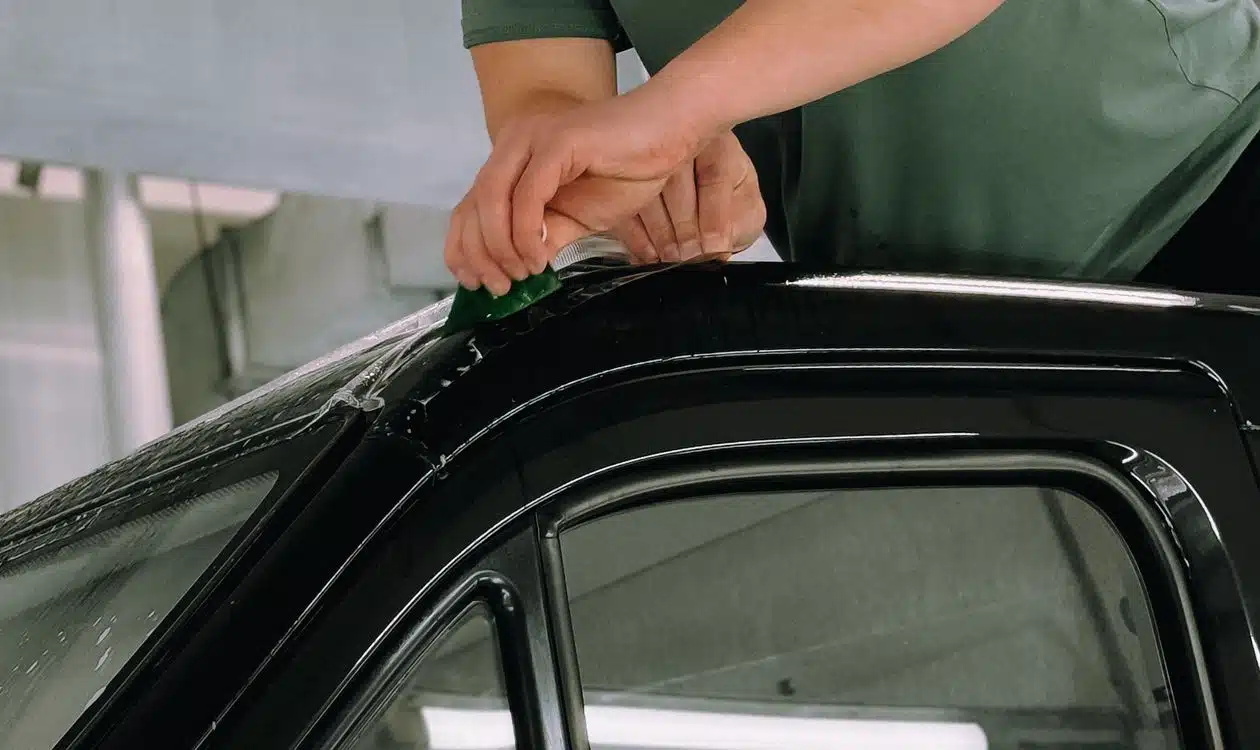
Quick answer: Window tinting in Orange County costs $199–$749+ depending on film type and vehicle size. Ceramic films from 3M, XPEL, LLumar, and SunTek deliver the strongest heat rejection. California law requires front side windows to transmit at least 70% of visible light. The Tint Pros in Costa Mesa and Huntington Beach has been doing car tinting in Orange County since 1979.
Why Orange County Drivers Tint Their Windows
Orange County gets roughly 280 sunny days a year. That’s excellent beach weather and brutal punishment for a vehicle sitting in the sun.
A car parked on a clear afternoon in Newport Beach, Huntington Beach, or Costa Mesa can reach interior temperatures above 150°F. The dashboard fades. Leather dries out and cracks. Every time you get in, you’re waiting several miles for the A/C to catch up. Window tinting intercepts the heat at the glass before it ever reaches the cabin.
UV protection matters just as much. Standard automotive glass blocks most UVB radiation but passes through the majority of UVA. UVA penetrates deeply into skin tissue and is associated with premature aging and elevated skin cancer risk. A 2012 case report in the New England Journal of Medicine documented pronounced left-side facial aging in a 69-year-old truck driver after decades of UVA exposure through the driver-side window. Quality window films block over 99% of both UVA and UVB.
There’s also a practical interior-preservation angle. Reduced heat and UV extends the lifespan of leather, fabric, and plastic trim. For a newer vehicle or a lease, that return on investment adds up.
Types of Window Tint Available in Orange County
Four main film technologies cover the market. What you choose affects performance, longevity, and price. Our automotive window tinting service installs all four types.
Ceramic Tint
Ceramic tint is the most capable film available. Nano-ceramic particles embedded in the film reject infrared heat without using metal, which means no interference with GPS, cell signals, or toll transponders. That’s a practical advantage for drivers on the 405, the 91, or the Costa Mesa Freeway. Ceramic films maintain clear visibility even at lower VLT percentages. 3M Crystalline and XPEL Prime XR+ are two of the most widely installed ceramic options; XPEL Prime XR+ carries a TSER above 60%, while 3M Crystalline ratings vary from roughly 47% to 97% depending on the series.
Carbon Tint
Carbon tint doesn’t match ceramic in heat rejection, but it holds up well over time and delivers a clean matte appearance that many drivers prefer. Carbon film resists color fading and shift better than dyed film. A reliable midrange choice for a vehicle you plan to own long-term.
Dyed Tint
Dyed tint is the entry-level option: lower cost, good for privacy and glare reduction, but limited in heat rejection compared to carbon or ceramic. LLumar’s ATC series is a common dyed film. On a hot July afternoon in Anaheim, the difference in cabin comfort between dyed and ceramic becomes obvious.
Hybrid Tint
Hybrid tint combines a metallic layer with dye to improve heat blocking above what pure dyed film achieves. SunTek’s hybrid line sits between dyed and ceramic in both performance and price. Signal interference from the metallic component is reduced compared to older all-metal films, though not fully eliminated.
Auto Window Tinting in Orange County
Most car tint jobs in Orange County land somewhere between $199 and $749. A dyed film on a sedan runs about $199–$299. Carbon film is $299–$399. Ceramic, which is what most drivers here end up choosing, is $399–$599 for a sedan and closer to $499–$749+ for the top-shelf 3M or XPEL premium ceramic lines. SUVs, trucks, and Teslas add $50–$150 to any of those tiers because there is more glass to cover.
The price gap between dyed and ceramic exists for a reason. Dyed film blocks glare but does very little for heat. You will still cook in an August parking lot in Irvine. Ceramic blocks infrared, which is the part of sunlight that actually heats the cabin. A ceramic install on a car parked at South Coast Plaza will read 25–35°F cooler inside than an untinted car sitting next to it.
What you are paying for is not just the film. It is the installer’s experience with your specific glass, the cleanroom conditions, and whether the shop is an authorized dealer that can register the warranty in your name. Bargain shops that quote $99 for a full car are cutting corners on all three. The film is usually off-brand, the install is rushed, and there is no manufacturer warranty when it bubbles in year two.
Orange County auto tinting also has a legal side that trips up out-of-state buyers. California caps front side windows at 70% VLT, meaning the front driver and passenger glass must let 70% of visible light through. Rear windows can go as dark as you want. Any shop worth calling will refuse to install darker film on the front and hand you the VLT rating for whatever film you pick.
For the full breakdown of what we install, film-by-film specs, and the shop workflow, see our auto window tinting service page.
Window Tint Cost in Orange County
Pricing depends on film type and vehicle size. These are realistic ranges for a standard passenger sedan:
| Film Type | Typical Cost (Sedan) |
|---|---|
| Dyed | $199 – $299 |
| Carbon | $299 – $399 |
| Ceramic | $399 – $599 |
| Premium Ceramic (3M, XPEL) | $499 – $749+ |
SUVs, trucks, and vans typically add $50–$150 to any of those tiers because of additional glass area. Partial installs (rear window only, windshield visor strip, or individual panels) cost less than a full vehicle job. See our OC tinting prices page for a line-item breakdown by film tier and vehicle size.
Film quality directly affects longevity. Bargain tints peel, bubble, and shift color within a few years. Films from 3M, XPEL, LLumar, and SunTek carry lifetime warranties when installed by an authorized dealer. That warranty ties to the installation, not just the product, which is why authorized dealer status matters.
California Window Tint Laws
California Vehicle Code § 26708 governs window tinting for all vehicles registered in the state. Here’s how it applies to most passenger cars in Orange County:
- Windshield: Non-reflective tint is permitted on the top 4 inches only.
- Front side windows: Must transmit at least 70% of visible light (70% VLT minimum).
- Rear side windows: Any darkness permitted when the vehicle has dual outside mirrors.
- Rear window: Any darkness permitted with dual outside mirrors in place.
- Reflectivity: No window may be more reflective than standard untinted glass.
- Restricted colors: Red, amber, and blue tints are prohibited on any window.
Medical exemptions exist for drivers with documented conditions such as lupus, photosensitivity disorders, or post-surgical recovery that require reduced UV exposure. An approved exemption allows darker film on the front side windows beyond the standard 70% VLT limit.
Before any film goes on your car, ask the installer for its VLT rating. A reputable shop will provide that number without hesitation.
Why Choose The Tint Pros
The Tint Pros has been doing car tinting in Orange County since 1979. Two locations cover the county: Costa Mesa on Harbor Boulevard draws customers from Newport Beach, Irvine, and throughout the South OC corridor; Huntington Beach on Warner Avenue covers the North OC and beach cities.
Both locations are authorized dealers for 3M, XPEL, LLumar, and SunTek. Authorized dealer status matters because it connects the manufacturer’s warranty to the specific installation. If a film fails, the claim runs through the manufacturer, not just a verbal promise from the shop.
Four-plus decades of installs in Orange County means every make, model, and glass configuration is familiar territory: complex curved rear windows, panoramic sunroofs, specialty vehicles, oversized trucks. That experience shows in installations that sit flat and stay that way.
Tesla owners in Orange County will find a complete breakdown — model-by-model glass quirks, ceramic film picks, Autopilot camera notes, and 2026 pricing — in our dedicated Tesla window tinting guide for OC.
We also offer residential window tinting for homes throughout Orange County — the same 3M, XPEL, LLumar, and SunTek films applied to your home glass for heat rejection, UV protection, and glare control.
The Tint Pros also handles commercial window tinting for offices, storefronts, and mixed-use buildings across Orange County. The same 3M, XPEL, LLumar, and SunTek films go on storefront glass and curtain walls.
Frequently Asked Questions
How long does a window tinting appointment take?
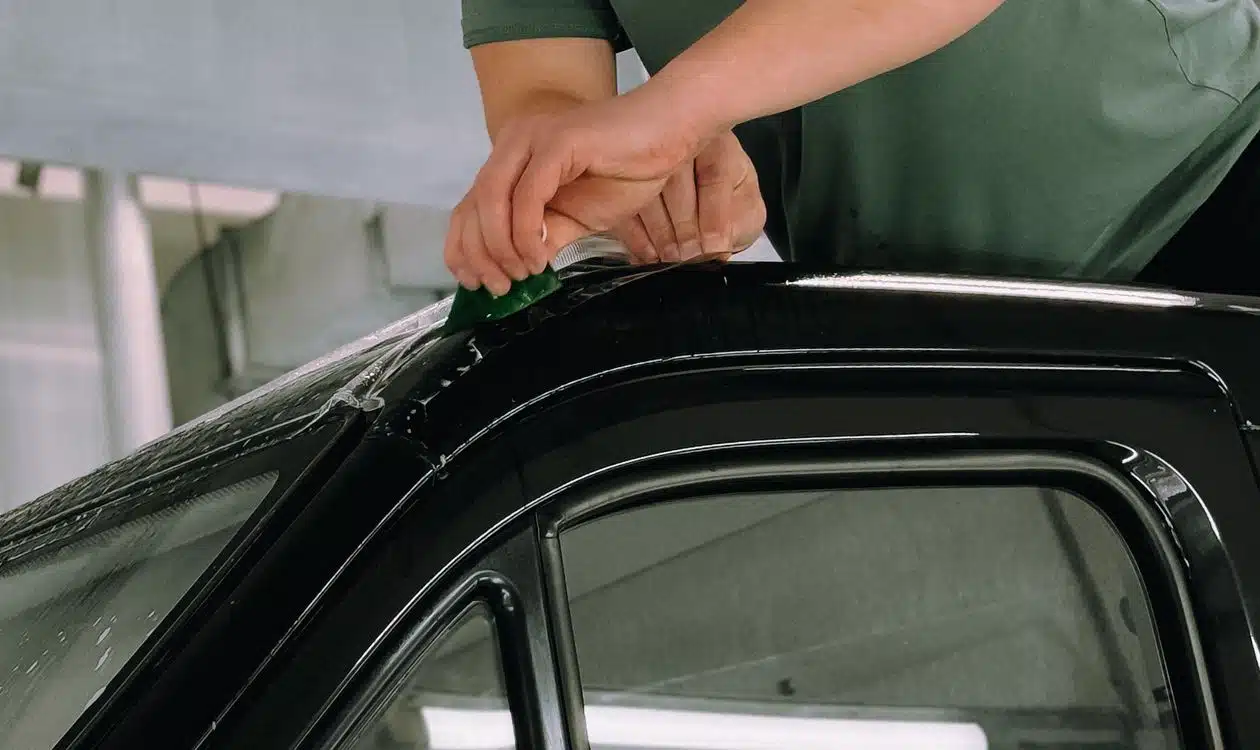
A full vehicle install covering all windows typically runs 2–4 hours for a standard passenger car. Larger vehicles take longer. Single-panel jobs like a rear window or windshield strip are often done in under an hour. Plan for a half-day if you’re doing the whole car.
When can I roll down my windows after tinting?
Wait 3–5 days before rolling down any tinted windows. The adhesive bonds to the glass during the cure period, and rolling a window down early can cause the edge of the film to peel. Avoid exterior car washes during the same window.
Does window tinting affect night driving visibility?
Front side windows must meet the 70% VLT minimum under California law, which preserves most daylight and nighttime visibility for the driver. Rear windows can be tinted much darker — which is why the law requires dual side mirrors when the rear window is tinted. Through the front, legal tint has minimal impact on nighttime driving.
Does window tint actually reduce heat in a parked car?
Measurably, yes. Ceramic films can drop interior temperatures by 30°F or more in a vehicle parked in direct sun. Even mid-grade films reduce heat buildup noticeably. On a 95°F afternoon in Costa Mesa, the difference between a tinted and untinted car is clear the moment you open the door.
What is total solar energy rejection (TSER)?
TSER measures how much of the sun’s total energy (visible light, infrared, and UV combined) a film blocks. A higher TSER means less heat enters the cabin. Premium ceramic films like XPEL Prime XR+ carry TSER ratings above 60%; 3M Crystalline ranges from roughly 47% to 97% depending on the series. Entry-level films often fall in the 30–40% range. TSER is a more complete performance indicator than VLT alone, since VLT only measures visible light and not infrared heat.
What are the best car tint shops in Orange County?
The short answer: whichever one is an authorized dealer for the film brand you want, has been installing in the county long enough that they have seen your car’s glass configuration before, and will hand you the VLT rating in writing. Authorized dealer status matters because it ties the manufacturer warranty (3M, XPEL, LLumar, SunTek) to your specific install. Without it, a bubbling film in year three is your problem, not the manufacturer’s.
Longevity in the market is the other signal. Tint shops in OC come and go. A shop that has been on the same block for 10+ years has weathered enough Santa Ana heat cycles to know which films actually hold up. The Tint Pros has been doing car tint Orange County drivers rely on since 1979, out of Costa Mesa (3050 Harbor Blvd) and Huntington Beach (7885 Warner Ave), and we are authorized for all four major brands above. Call either shop, ask for the VLT rating and warranty terms, and compare against whatever else you are considering. That comparison alone will thin the list fast.
Book Your Appointment
Costa Mesa
3050 Harbor Blvd, Suite A, Costa Mesa, CA 92626
(949) 642-1121
Huntington Beach
7885 Warner Ave, Huntington Beach, CA 92647
(714) 964-8468
Call either location for a quote on your vehicle. The Tint Pros has been handling car tinting in Orange County since 1979 — stop by Costa Mesa or Huntington Beach to get started.