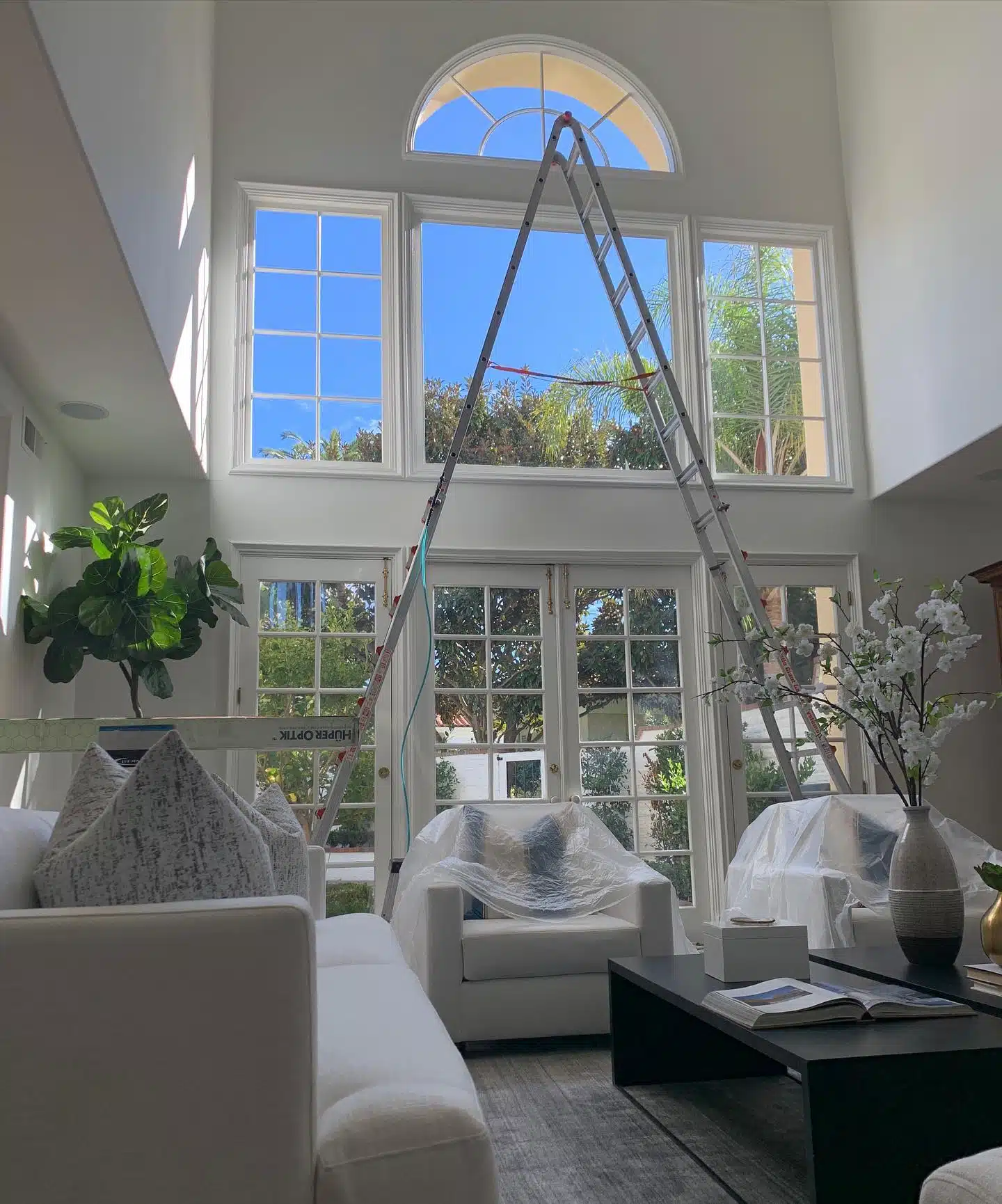
Residential window tinting in Orange County blocks up to 99% of UV rays, reduces interior heat by 50–80%, cuts energy bills by 10–25%, and protects your furniture and flooring from fading — all without blocking your view.
With 280+ sunny days per year, Orange County homes take a beating from Southern California’s UV and heat. Here’s how window film solves it.
Why Orange County Homeowners Tint Their Windows
1. Reduce Heat Without Blocking Your View
Orange County’s year-round sun creates intense heat gain through untreated glass. A single uncoated window on a south or west-facing wall can raise room temperature by 10°F or more in the afternoon.
Solar control window film rejects 50–80% of solar heat through the glass — without significantly reducing the light coming in. Many homeowners report their homes feeling brighter after installation because they can finally open the blinds without the blinding glare that forced them shut.
For homes with views of the ocean, hills, or golf courses, film lets you enjoy that view without the heat and UV exposure that comes with it.
2. Cut Energy Bills
Every watt of solar heat your windows let in is a watt your AC has to remove. With Orange County’s near-year-round AC season, untreated windows are a persistent HVAC load.
Solar control and Low-E window film reduce that heat gain, cutting cooling costs by 10–25% for most Orange County homes. Many homeowners see the film pay for itself within 3–7 years in energy savings alone.
3. Block UV That Fades Furniture, Flooring, and Art
Standard window glass blocks UVB rays but lets through UVA — the wavelength responsible for most fading damage to:
- Hardwood floors
- Carpets and rugs
- Upholstery and furniture
- Artwork and photographs
- Window treatments
Premium window film blocks up to 99% of UV radiation, dramatically extending the life of your interior furnishings. For Orange County homeowners with high-end flooring, custom rugs, or valuable art, this protection can be worth far more than the cost of the film.
4. Reduce Glare
Coastal glare in communities like Newport Beach, Laguna Beach, and Huntington Beach is especially intense when sunlight reflects off water. Interior glare makes:
- TV and monitor screens impossible to see
- Reading uncomfortable
- Working from home difficult in afternoon hours
Solar control film reduces glare significantly while maintaining natural light — without requiring you to close blinds.
5. Add Daytime Privacy Without Sacrificing Light
One-way reflective films and privacy films allow you to see out clearly while blocking the view into your home during daylight hours. This is especially effective for:
- Street-facing windows in urban or suburban settings
- Ground-floor bedroom or bathroom windows
- Properties where neighboring homes have sightlines into your living areas
Note: daytime privacy films are less effective at night when interior lighting is visible from outside.
Want a free home estimate?
Types of Residential Window Film
Solar Control Film
The most common residential choice. Rejects solar heat and UV while maintaining good visible light transmission. Available in various darkness levels — from nearly invisible to moderately tinted.
Best for: Heat reduction, UV protection, glare control, and general comfort improvement.
Low-E Energy Film
More advanced than standard solar control film. Low-E (low-emissivity) film reflects radiant heat back to its source year-round — keeping solar heat out in summer and retaining interior warmth in winter.
Best for: Homeowners with significant HVAC costs, older single-pane or double-pane glass that underperforms thermally.
Safety / Security Film
Thick polyester film that holds glass together on impact. Slows forced entry, contains glass shards during earthquakes (a real concern in Southern California), and protects against accidental glass breakage.
Best for: Ground-floor windows, homes with children, earthquake-preparedness-focused homeowners, pool areas with glass panels (required by California code in some configurations).
Privacy / Decorative / Frosted Film
Frosted, etched, or patterned film for bathroom windows, sidelights next to front doors, and glass partitions. Maintains light transmission while obscuring the view through the glass.
Best for: Bathrooms, entrance sidelights, glass privacy partitions, design enhancement.
How Much Does Home Window Tinting Cost in Orange County?
Residential window film is typically priced per square foot:
| Film Type | Price Per Sq Ft (installed) |
|---|---|
| Standard solar control | $5–$9 / sq ft |
| Premium ceramic film | $9–$14 / sq ft |
| Low-E energy film | $10–$16 / sq ft |
| Safety / security film | $8–$14 / sq ft |
| Privacy / decorative film | $7–$12 / sq ft |
A typical Orange County home with 10–15 windows averages $400–$1,200 for solar control film. Larger homes or premium film choices run higher.
The Tint Pros offers free home estimates — contact us to schedule a no-cost assessment and get a specific quote.
Does Home Window Film Void My Window Warranty?
Most window manufacturers do not void warranties for the addition of professionally installed film from reputable brands like 3M and LLumar. However, if you have newer high-performance windows with specialized coatings (like some low-E glass), The Tint Pros recommends reviewing your window warranty terms before installation. We’re happy to advise based on your window type.
Ready to schedule your home estimate?
Frequently Asked Questions
Will residential window tinting make my home darker?
Most modern solar control films maintain high visible light transmission — they reject heat and UV without significantly dimming the room. Many homeowners report their homes feel brighter because they no longer need to keep blinds closed to block glare.
How long does home window film last?
Premium residential window films from 3M and LLumar carry 10–15 year manufacturer warranties. Professionally installed film will not bubble, peel, or discolor under normal indoor conditions.
Can window tinting help with my energy bills?
Yes. Solar control and Low-E films reduce heat gain through glass by 50–80%, lowering your HVAC load. Orange County homeowners typically see 10–25% reductions in cooling costs. Low-E film can also help with winter heat retention in cooler inland OC communities.
Will window film protect my furniture and floors from fading?
Yes — up to 99% UV blocking is standard in quality residential film. UV radiation from the sun is the primary cause of fading in furniture, flooring, and artwork. Film dramatically slows this deterioration.
Can I get window tinting that provides privacy during the day?
Yes. Reflective films and privacy films allow you to see out while blocking the inward view during daylight hours. The effect is less pronounced at night when interior lighting is on.
Does The Tint Pros install residential film in Newport Beach and Laguna Beach?
Yes. Our Costa Mesa location at 1590 Newport Blvd serves Newport Beach, Laguna Beach, Irvine, Dana Point, and throughout Orange County. Our Huntington Beach location covers the north and coastal OC communities.